
Technical fabrics are engineered to boost your workout by keeping you dry, comfortable, and supported. Unlike cotton, these materials wick sweat, regulate body temperature, and maintain durability through intense use. Here’s a quick look at five standout options:
- Polyester Microfiber Blends: Lightweight, moisture-wicking, and long-lasting, perfect for running shorts and activewear.
- Nylon-Spandex Fabrics: Offers 4-way stretch, shape retention, and breathability, ideal for yoga pants and leggings.
- Compression Knits: Provides muscle support and improved circulation, great for recovery gear and high-intensity workouts.
- Breathable Mesh: Maximizes airflow and sweat evaporation, best for summer gear and hot-weather activities.
- Thermal & Phase-Change Fabrics: Adjusts to body temperature, designed for cold-weather training and variable climates.
Each fabric type serves a specific purpose, helping athletes stay comfortable and perform better. Keep reading for detailed insights into their features and applications.
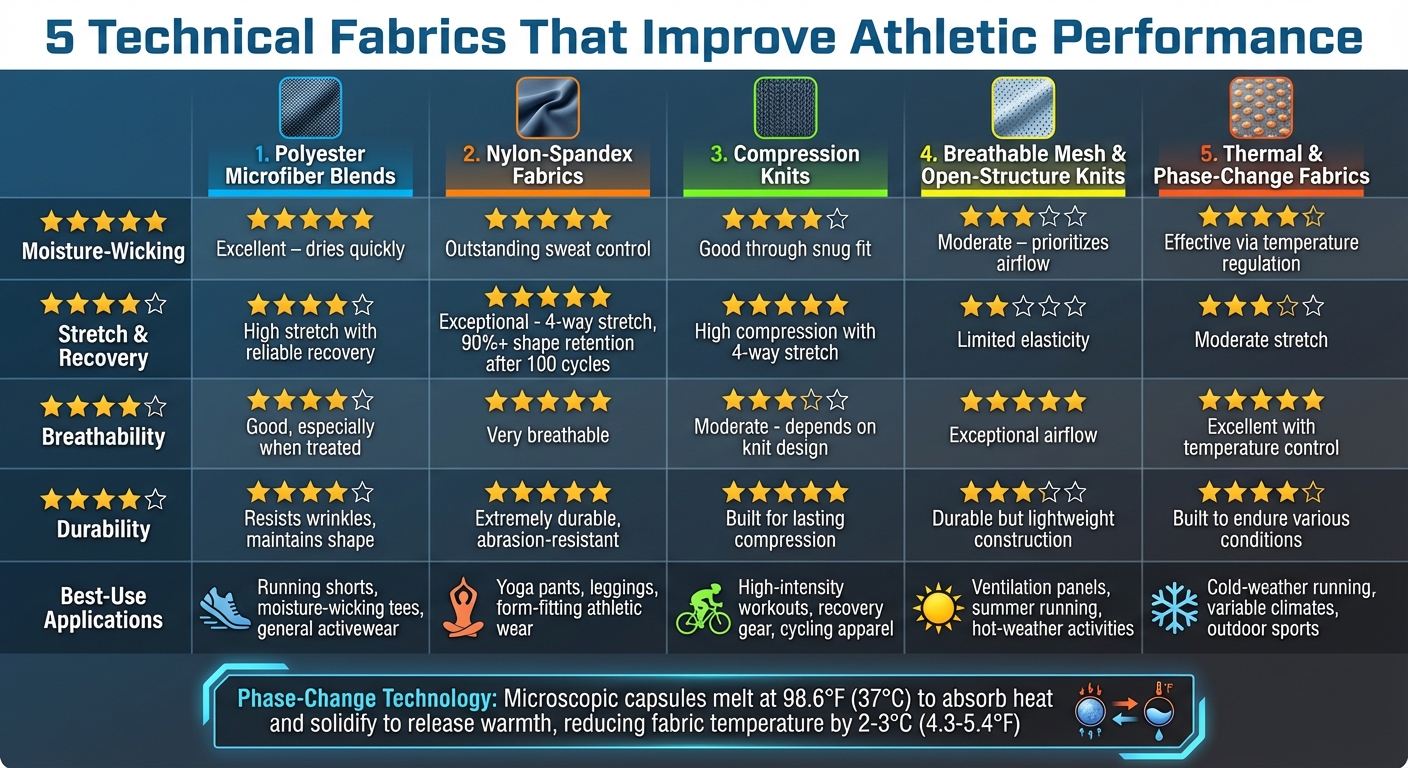
Technical Athletic Fabrics Performance Comparison Chart
The Complete Activewear Textile Guide (Sportswear Secrets)
1. Polyester Microfiber Blends
Polyester microfiber blends are crafted from ultra-fine polyester fibers, each measuring less than one denier. These fibers create a fabric that’s soft, lightweight, and smooth – qualities that make it ideal for activewear like leggings, running shorts, and sports bras. This meticulous fiber design ensures exceptional moisture control and long-lasting durability, even during intense physical activities.
Moisture Management
One standout feature of these blends is their ability to handle moisture effectively. The fabric contains thousands of tiny capillary channels that quickly move sweat to the outer surface, allowing it to evaporate faster. Research shows that micro-polyester performs better in moisture management compared to texturized polyester and polyester-spandex blends.
A few examples highlight this capability:
- REPREVE® Recycled Polyester: Treated with an advanced wicking finish for maximum comfort in sportswear.
- Ronhill‘s Vapourlite Fabric: Specifically engineered to draw sweat and heat away from the skin.
- New Balance DRY Technology: Combines recycled polyester and spandex to actively wick moisture and speed up drying times.
Additionally, the fabric’s design promotes airflow, helping to keep you cool and prevent overheating during tough workouts.
Durability
Polyester microfiber blends are built to withstand the challenges of active use. They resist wear and tear from washing, abrasion, and repeated use while maintaining their shape, elasticity, and color. Unlike cotton, which tends to degrade over time, polyester’s synthetic structure provides much greater longevity, making it a reliable choice for high-impact activities.
2. Nylon-Spandex Fabrics
Nylon-spandex blends are a powerhouse combination, bringing together nylon’s strength and spandex’s incredible stretch. This creates a fabric that moves effortlessly with your body, offering 4-way stretch – meaning it can expand in all directions. Whether you’re powering through yoga poses, lifting weights, or tackling a HIIT session, this fabric keeps up with every move. Impressively, spandex can stretch to more than 500% of its original length without snapping.
Stretch and Recovery
One of the standout features of nylon-spandex fabric is its ability to snap back into shape after stretching. Thanks to nylon’s durability and spandex’s elasticity, garments made from this blend maintain their fit over time. Spandex ensures the fabric bounces back to its original form, while nylon prevents sagging, delivering a snug, reliable fit – even after repeated wear. For example, studies show that nylon retains over 90% of its shape after being stretched by 10% for 100 cycles. Unlike cotton, which offers minimal stretch and recovery, this blend is built for performance, ensuring your gear stays comfortable and supportive no matter how intense your workout gets.
Durability
Durability is another area where nylon-spandex fabrics shine. Nylon resists abrasion, wear, and the effects of frequent washing, making it tougher than polyester and much longer-lasting than natural fibers like cotton . These garments hold their shape, elasticity, and color even after countless washes and high-impact use. To extend their lifespan, it’s best to wash them in cold water with mild detergent, skip fabric softeners, and either air dry or use low heat in the dryer. Beyond just lasting longer, this blend is also designed to handle sweat effectively.
Breathability
When it comes to keeping you cool, nylon takes the lead by wicking sweat away from your skin. While spandex on its own isn’t particularly breathable, the blend still works well for athletic activities. The breathability largely depends on the nylon-to-spandex ratio and the knit structure of the fabric. Together, these factors help maintain airflow during intense workouts.
3. Compression Knits
Compression knits are designed to apply precise pressure to muscles, promoting better blood flow and improving body awareness, also known as proprioception. These fabrics, like other advanced materials, are crafted to help athletes perform at their best. Using elastomeric yarns – primarily blends with elastane – they achieve their signature snug fit. Full-body designs can help increase speed, while lower-body options are tailored to boost endurance. Let’s dive into how these fabrics excel in stretch, moisture control, and breathability.
Stretch and Recovery
Compression knits are built to stretch significantly while maintaining steady pressure, thanks to elastane’s ability to bounce back to its original shape. This durability ensures the compression effect stays intact, even after multiple wears and washes.
Moisture Management
The tight weave of compression knits, combined with moisture-wicking properties, helps draw sweat away from the skin and onto the fabric’s surface, where it evaporates quickly. Many of these garments use a single jersey knit structure, which is porous and ideal for keeping athletes comfortable and dry during intense activities.
Breathability
High-quality compression knits also allow for airflow, preventing overheating during workouts. A common blend, such as 90% polyester and 10% elastane, reduces water vapor resistance, making the fabric more breathable and comfortable. This ability to manage water vapor is especially useful during light to moderate sweating, ensuring you stay cool without feeling trapped in the fabric.
sbb-itb-8dbc09a
4. Breathable Mesh and Open-Structure Knits
Building on the benefits of compression knits, breathable mesh and open-structure knits take airflow and moisture control to the next level. These fabrics are specifically crafted to enhance ventilation and manage sweat, making them a go-to choice for high-intensity workouts. Their porous design allows air to circulate freely, helping to keep the body cool while efficiently wicking sweat away from the skin.
Breathability
The open-knit design naturally creates ventilation channels that help athletes stay cool during intense physical activity. For instance, fabrics like Polartec Power Grid use strategically placed channels on the fabric’s inner surface to promote airflow and speed up moisture evaporation. Some materials even incorporate advanced thermoregulating technologies, such as Polygiene® StayCool, which can reduce fabric temperatures by 2–3°C (around 4.3–5.4°F) when in contact with sweat. These features make these fabrics a standout choice for activewear designed to perform under pressure.
Moisture Management
These fabrics excel at managing sweat through a three-step process: wicking moisture from the skin, spreading it across the fabric surface, and ensuring quick evaporation. Microfibers create capillary action that pulls sweat away from the skin, while synthetic materials like polyester and nylon, being non-absorbent, allow for rapid moisture movement and drying. Among these, polyester and polypropylene are known for their exceptional drying speed. This quick-drying ability not only keeps wearers comfortable but also minimizes the chance of bacteria growth, which can lead to odors.
Durability
Fabrics made from high-quality polyester and nylon stand up well to wear and tear, retaining their elasticity and vibrant colors even after multiple washes.
5. Thermal and Phase-Change Fabrics
Thermal and phase-change fabrics take temperature regulation to the next level by actively adjusting to your body’s needs. These fabrics use microscopic capsules that respond to temperature changes. At 98.6°F (37°C), these capsules melt to absorb excess heat and solidify to release warmth when temperatures drop. This dynamic process keeps you comfortable, especially in extreme or shifting weather conditions.
Breathability
One of the standout features of phase-change materials is their ability to smooth out temperature swings, reducing thermal stress during physical activity. By maintaining a steady body temperature, these fabrics help conserve energy, letting you stay focused on your performance. Plus, with less sweating due to consistent temperature control, workouts become more comfortable. The combination of temperature regulation and moisture management ensures an optimal experience, even during high-intensity activities.
Durability
Designed for durability, these fabrics are built to withstand repeated use and tough conditions. Made from resilient polyester and nylon blends, they maintain their shape, stretch, and temperature-regulating abilities even after multiple washes and demanding workouts. This makes them a reliable choice for long-term performance.
Comparison Table
Below is a handy comparison chart that highlights the key performance features of each fabric type. This table makes it easier to match fabric properties with specific performance needs.
| Fabric Type | Moisture-Wicking | Stretch & Recovery | Breathability | Durability | Best-Use Applications |
|---|---|---|---|---|---|
| Polyester Microfiber Blends | Excellent at managing sweat, dries quickly. | High stretch with reliable recovery. | Good, especially when treated or combined with other materials. | Resists wrinkles and maintains shape well over time. | Ideal for running shorts, moisture-wicking tees, and general activewear. |
| Nylon-Spandex Fabrics | Outstanding sweat control, with nylon handling moisture and spandex adding comfort. | Exceptional stretch with strong shape retention. | Very breathable, thanks to nylon’s natural properties. | Extremely durable and abrasion-resistant. | Perfect for yoga pants, leggings, and snug athletic wear. |
| Compression Knits | Provides good sweat control through a snug, supportive fit. | Offers high compression with 4-way stretch and consistent recovery. | Moderate breathability, depending on the knit design. | Built for lasting compression and shape retention. | Best for high-intensity workouts, recovery gear, and cycling apparel. |
| Breathable Mesh & Open-Structure Knits | Moderate moisture control, prioritizing airflow over sweat transport. | Limited elasticity, as ventilation takes precedence. | Exceptional airflow due to open-knit design. | Durable but may be less resilient due to lightweight construction. | Great for ventilation panels, summer running gear, and hot-weather activities. |
| Thermal & Phase-Change Fabrics | Manages moisture effectively by regulating body temperature. | Moderate stretch, typical of polyester-nylon blends. | Excellent airflow with advanced temperature control features. | Built to endure a variety of conditions. | Designed for cold-weather running, training in variable climates, and outdoor sports. |
This table serves as a quick reference to help you choose the right fabric for your specific performance requirements.
Conclusion
Every fabric, from moisture-wicking polyester blends to temperature-regulating phase-change materials, plays a specific role in enhancing athletic performance. These materials are not just about comfort – they’re about functionality tailored to meet the rigorous demands of athletes.
Creating these advanced fabrics requires a deep understanding of material science and precise manufacturing techniques. Sophisticated production processes and stringent quality assurance protocols are essential to ensure that these fabrics meet the high-performance standards expected in technical materials.
When it comes to achieving excellence in fabric performance, manufacturing expertise is key. New Dong Huang Garment Co., Ltd. brings nearly three decades of experience in activewear production. They specialize in blending cutting-edge fabrics with meticulous production methods. Their capabilities include custom design services, eco-conscious fabric development, and robust quality control systems, ensuring consistent performance in every piece of activewear. With certifications like BSCI, Sedex, and GRS, and an impressive 99% on-time delivery rate, they demonstrate the technical precision needed to turn innovative activewear concepts into reality.
Ultimately, skilled manufacturers are the backbone of performance fabrics, ensuring they deliver the durability, functionality, and comfort that athletes rely on.
FAQs
What makes technical fabrics better than natural fibers like cotton for athletic wear?
Technical fabrics are crafted to boost athletic performance by addressing the shortcomings of natural fibers like cotton. They excel at pulling moisture away from the skin, drying quickly, and standing up to wear and tear. This helps keep your body temperature in check, reduces irritation, and cuts down on chafing during workouts or physical activities.
While cotton tends to soak up sweat and feel heavy, technical fabrics remain lightweight and breathable, even during intense exercise. This makes them a go-to choice for anyone seeking comfort and functionality, allowing you to stay focused on your performance without unnecessary distractions.
What are the advantages of wearing compression fabrics during high-intensity workouts?
Compression fabrics bring a range of perks to high-intensity workouts. For starters, they deliver focused muscle support, which can help reduce fatigue and boost endurance during demanding activities. On top of that, these fabrics encourage better blood flow and oxygen delivery, potentially enhancing your performance and speeding up recovery.
Another advantage is their ability to lessen muscle soreness and stiffness post-workout, making them ideal for both training and recovery sessions. Their close, snug fit not only improves your range of motion but also helps prevent chafing, ensuring you stay comfortable while pushing yourself to the max.
How do thermal and phase-change fabrics help regulate body temperature during workouts?
Thermal fabrics are designed to regulate your body temperature during exercise by absorbing extra heat when you’re warming up and releasing it as you cool down. Phase-change fabrics add a more advanced twist to this concept. These materials use microcapsules filled with wax that melts at around 98.6°F – your body’s natural temperature. When you’re overheated, the wax absorbs that excess heat, and as you cool off, it releases the stored warmth to help maintain a steady, comfortable temperature.
Both fabric types aim to keep you at ease and focused, no matter how demanding your workout becomes.