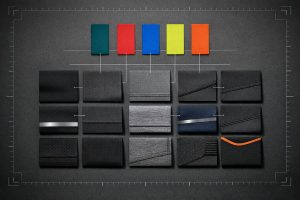

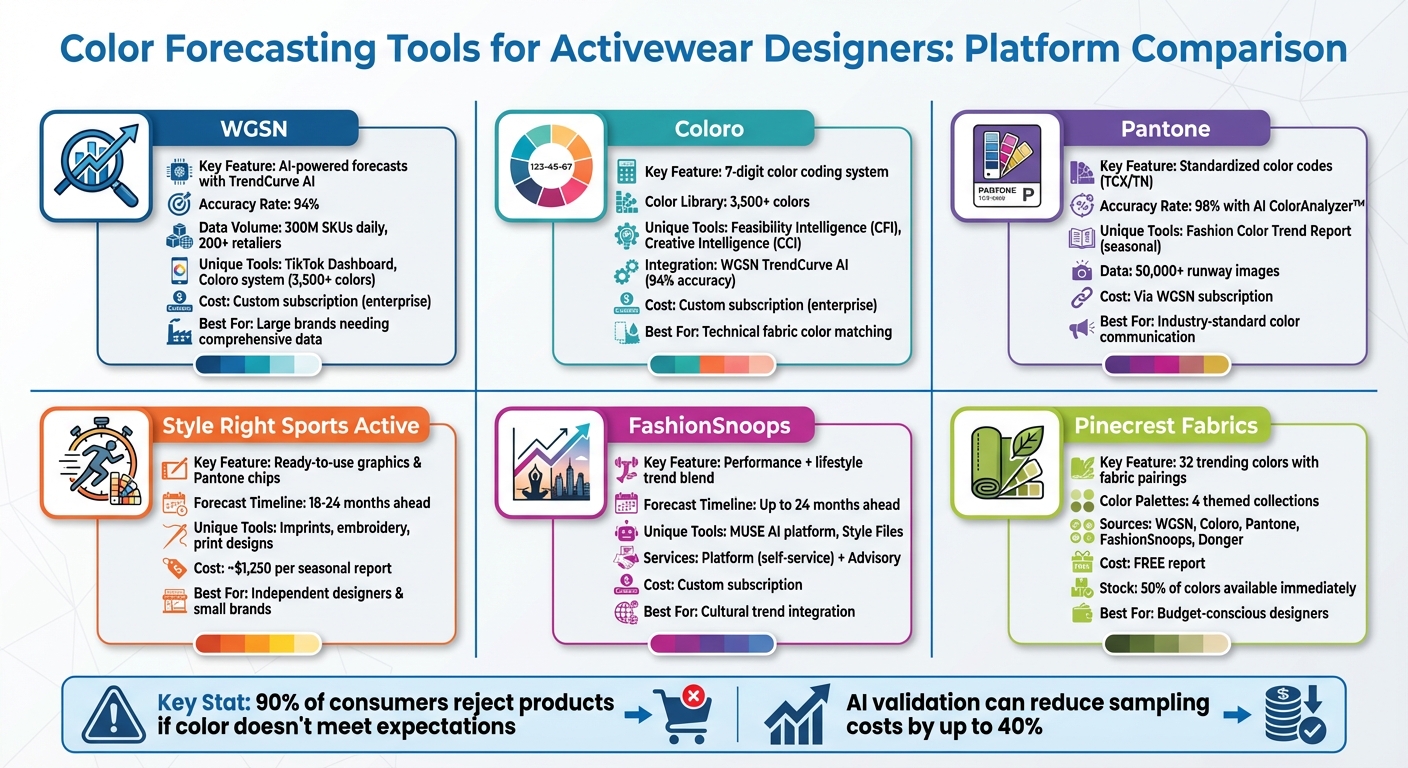
Color forecasting tools help activewear designers predict trends, reduce waste, and ensure color accuracy for technical fabrics. Platforms like WGSN, Coloro, Pantone, and others combine AI and expert insights to analyze consumer preferences, market data, and fabric feasibility. These tools streamline design processes, improve sell-through rates, and align collections with market demands. Here’s a quick breakdown:
- WGSN: AI-powered forecasts with 94% accuracy, robust data analysis, and tools like TrendCurve AI and TikTok Dashboard.
- Coloro: A seven-digit color coding system, feasibility checks for technical fabrics, and custom palette creation.
- Pantone: Standardized color libraries, seasonal trend reports, and AI tools for precise color validation.
- Style Right Sports Active: Trend reports with ready-to-use graphics and Pantone chips for precise color matching.
- FashionSnoops: AI-driven tools blending performance and lifestyle trends, with insights up to 24 months ahead.
- Pinecrest Fabrics: Free reports featuring 32 trending colors paired with fabric recommendations.
These tools help brands like New Dong Huang Garment Co., Ltd. translate trends into production-ready designs with fewer errors and better market alignment. Accurate color forecasting is essential as 90% of consumers reject products if the color doesn’t meet expectations.
Color Forecasting Tools Comparison for Activewear Designers
1. WGSN
Trend Accuracy and Relevance for Activewear
WGSN’s Sports & Outdoor platform is tailored for activewear designers who need precise insights into color forecasting, material trends, and evolving consumer preferences. Its TrendCurve AI model boasts an impressive 94% accuracy rate by analyzing a staggering volume of data – 300 million SKUs daily, over 200 retailers, and more than 100,000 social media posts every month.
The forecasting process is powered by a combination of 2,800 third-party data sources and five proprietary feeds: Social, Sentiment (tracking 30 million consumer clicks), Search (drawing on five years of marketplace data), Shelf, and Shows (analyzing over 5 million catwalk and tradeshow images). To ensure predictions are grounded in reality, a global team of 250+ experts reviews the AI-generated forecasts through an "analyst-in-the-loop" system. This blend of advanced technology and human expertise forms the backbone of WGSN’s tools, which are designed to simplify and elevate activewear design.
Unique Features
WGSN incorporates the Coloro system, a tool that categorizes over 3,500 colors using a unique seven-digit code based on hue, lightness, and chroma. This system ensures consistent color application from initial design stages to final production. Designers can also leverage the Coloro Creative Intelligence (CCI) tool to create custom color palettes from inspirational images and test combinations. Additionally, the Feasibility Intelligence (CFI) tool evaluates technical fabrics and suggests alternative shades when necessary, streamlining the design process.
For trend tracking, WGSN offers a TikTok Dashboard, which monitors real-time fitness and athleisure trends emerging on the platform. Designers also gain access to royalty-free prints, graphics, and both 2D and 3D CAD designs, providing a comprehensive toolkit for creative development.
Cost and Accessibility
WGSN operates on a subscription-based model with pricing customized to fit the size and needs of each business. Interested users can request a demo to receive a tailored quote. Trusted by over 6,500 brands – including 53 of the world’s top 100 – WGSN also provides monthly trend round-ups, making its insights accessible even to smaller brands.
2. Scout Forecasting
When exploring forecasting tools for activewear design, the value of detailed and transparent data cannot be overstated. Industry leaders like WGSN are known for setting high standards with their comprehensive metrics and reliable data sources. In contrast, Scout Forecasting offers far less publicly available information, making it difficult to evaluate its full potential.
Key details about Scout Forecasting – such as its features, pricing, and methodologies – are notably scarce. Unlike platforms that openly share insights into trend accuracy, AI-driven capabilities, or subscription options, Scout Forecasting maintains a more opaque approach. This lack of transparency poses challenges for designers who rely on precise data to navigate trends in performance fabrics, seasonal color palettes, and technical workflows.
For activewear brands, especially those collaborating with manufacturers like New Dong Huang Garment Co., Ltd., clarity is critical. Designers need access to detailed documentation to ensure that selected colors align with advanced fabric technologies, dyeing processes, and performance requirements. Whether it’s moisture-wicking leggings or UV-protective running jackets, the color selection process demands a level of precision that extends beyond basic fashion trends.
To fully understand how Scout Forecasting can meet your specific needs, consider reaching out for a demonstration. Request detailed pricing, case studies, and examples that align with your production schedules and market goals. Additionally, exploring other color forecasting tools may provide broader options to refine your activewear designs.
3. Coloro
Coloro uses a seven-digit coding system designed to reflect how the human eye perceives color – through hue, lightness, and chroma. This system provides a universal standard, ensuring consistent color matching across global supply chains, which is especially valuable when collaborating with manufacturers in different regions. With a library of over 3,500 colors, it offers plenty of options for creating seasonal palettes. Beyond its coding system, Coloro provides tools that simplify pre-production checks and streamline palette development.
Unique Features (e.g., AI tools and custom palettes)
The Coloro Feasibility Intelligence (CFI) tool evaluates whether a specific color can be accurately reproduced on a given fabric. For activewear designers working with technical materials like moisture-wicking polyester or UV-protective nylon, this feature ensures that vibrant shades are achievable. If a color isn’t feasible, the tool suggests the closest viable alternative.
The Creative Intelligence (CCI) tool lets you create custom palettes from inspirational images, such as a sunset photo or a mood board. You can digitally test these palettes on prints and patterns before ordering physical swatches, saving both time and materials. Additionally, the tool identifies gaps in your color range by analyzing underrepresented shades, giving you opportunities to expand your collection.
Coloro also integrates WGSN’s TrendCurve AI model, which boasts a 94% accuracy rate for forecasting. This feature helps validate color predictions, with WGSN providing tailored insights for sectors like "Sports & Outdoors." These insights ensure that color palettes align with market trends and consumer preferences .
Another advantage of the system is its independence from specific dyes. Unlike systems tied to particular chemical recipes or suppliers, Coloro’s dyestuff-agnostic approach allows manufacturers, such as New Dong Huang Garment Co., Ltd., to achieve precise color matching across technical fabrics – critical for performance-driven apparel.
Cost and Accessibility of Tools or Reports
Coloro’s tools and services are designed for professional design teams, but pricing details aren’t publicly available. Interested users need to request a demo to receive customized quotes, as access is typically provided via subscription plans or enterprise-level agreements, often integrated with WGSN’s broader forecasting services . The platform is tailored for brands and teams seeking comprehensive support from concept development to production.
4. Pantone
Pantone acts as the go-to color authority in the fashion and activewear industries, offering standardized color codes that ensure precise communication from the design stage to production. Each season, Pantone releases its Fashion Color Trend Report, spotlighting key colors expected to dominate upcoming trends. For activewear designers, this report provides a dependable starting point for creating palettes that align with market preferences.
Trend Accuracy and Relevance for Activewear
Pantone’s color libraries are integrated with professional forecasting platforms like WGSN, which provides specialized reports and mood boards tailored to activewear, footwear, and swimwear categories. This integration allows designers to access colors validated through rigorous data analysis, ensuring their choices align with current trends. Additionally, Pantone’s collaboration with advanced AI tools enhances the reliability of these predictions.
For example, AI tools like ColorAnalyzer™ use Pantone standards to match runway trends with an impressive 98% accuracy rate. These tools also identify growth patterns, such as a 34% rise in the popularity of Warm Beige (PANTONE 14-1315) or a 28% increase in Forest Green (PANTONE 18-0220) across recent seasons. Such insights help designers confidently incorporate consumer-ready colors into their collections.
Tools Tailored for Activewear Design
Beyond accurate trend forecasting, Pantone offers tools that simplify the design process. Its integration with AI-driven platforms allows for palette validation against a database of over 50,000 runway images. Designers receive a "Go/No-Go" confidence score, helping them decide whether a particular palette aligns with 6–12 month forecasts. These tools also identify "white space" opportunities by comparing seasonal trends to existing product lines.
When collaborating with manufacturers like New Dong Huang Garment Co., Ltd., Pantone’s standardized codes (TCX/TN) ensure that technical fabrics – such as moisture-wicking polyester or UV-protective nylon – are dyed precisely to specifications. Additionally, Pantone’s compatibility with 2D and 3D CAD tools streamlines the transition from digital designs to physical samples, cutting down on sampling costs through data-backed validation.
Cost and Accessibility of Tools or Reports
Access to Pantone’s tools and features is typically available through subscription plans offered by platforms like WGSN, which serves over 6,500 companies, including 53 of the world’s top 100 brands. Pricing details aren’t publicly disclosed, as access is often arranged through custom enterprise agreements. Designers interested in Pantone-integrated tools can request demos and receive personalized quotes. These platforms combine Pantone’s color standards with royalty-free graphics, prints, and CAD resources, creating an all-in-one solution for activewear design.
5. Style Right Sports Active
Style Right Sports Active provides trend reports and design tools tailored for activewear designers. Unlike platforms that focus solely on data analysis, Style Right combines inspiration with practicality, offering resources that designers can directly apply to their collections. This dual focus complements the advanced tools mentioned earlier, streamlining the entire design-to-production process.
Trend Accuracy and Relevance for Activewear
Style Right bridges the gap between market trends and production by aligning forecast data with actionable design insights. The reports cater to designers working on sports clothing, equipment, and product graphics or packaging, delivering a complete view of the activewear market. Seasonal editions, such as Spring/Summer 2027 and Autumn/Winter 2027-28, feature market-ready sports products. This forward-looking approach syncs with standard product development timelines, giving designers enough lead time to bring trends to life. Each report also includes Pantone® chips, ensuring precise seasonal color validation throughout the design and production stages.
Unique Features for Activewear Design
What sets Style Right apart is its inclusion of ready-to-use graphics specifically designed for the activewear industry. These graphics cover imprints, embroidery, applications, and allover prints, helping designers quickly move from concept to sample. Additionally, the reports offer design suggestions and accessory ideas, enabling cohesive collections across apparel, equipment, and packaging. This ensures a unified brand identity that resonates across all product lines.
Cost and Accessibility
Style Right’s pricing structure makes it accessible to independent designers and smaller brands, aligning with the need for budget-friendly forecasting tools. Each seasonal trend report is priced at 13,320.00 SEK (approximately $1,250). The inclusion of ready-to-adapt graphics and a transparent cost model simplifies the journey from trend analysis to production. For instance, when working with manufacturers like New Dong Huang Garment Co., Ltd., designers can use the Pantone® chips provided to ensure technical fabrics are dyed to exact specifications. This precision enhances communication between design and production teams, saving time and reducing errors.
sbb-itb-8dbc09a
6. FashionSnoops
FashionSnoops takes a unique approach to color forecasting by blending performance with cultural trends. Instead of viewing activewear as purely functional, the platform explores the intersection of high-performance gear, lifestyle wear, and streetwear. This ensures designs stay relevant to cultural shifts while maintaining their technical edge. They describe their process as combining "art and science", where research and data tracking are transformed into practical insights by industry professionals. This approach helps brands develop activewear that’s both stylish and functional.
Trend Accuracy and Relevance for Activewear
FashionSnoops uses data-driven strategies to forecast trends up to 24 months in advance, focusing on color innovations, material developments, sustainability requirements, and the merging of athletic categories. They stress the importance of balancing performance – like durability and safety – with trend-focused aesthetics. Tools like "Trend Confirmations" and "Trend ID" allow designers to validate their ideas using reliable, data-backed insights.
Unique Features for Activewear Design
In November 2025, FashionSnoops introduced MUSE, an AI-powered platform designed to enhance creativity while preserving originality. The platform also includes "Style Files", which provide detailed, product-specific insights, and strategic color tools that explain why certain hues resonate with consumers. These tools help brands create palettes that align with both design goals and merchandising strategies. Additionally, their pattern and graphic tools translate broad inspirations into specific, actionable designs tailored to different production timelines. These features address the dual demands of creativity and functionality in modern activewear.
Integration with Activewear Design Processes
FashionSnoops offers two main solutions: a self-service "Platform" that acts as a creative hub, and "Advisory" services where experts develop customized strategies based on market analysis. Designers can also use "Runway Reports" to simplify complex fashion week data into clear, actionable insights for seasonal collections. For instance, when collaborating with New Dong Huang Garment Co., Ltd., these insights can help align technical specifications with emerging market trends. FashionSnoops goes beyond simply aggregating data – it provides a framework for turning that data into actionable creative direction.
7. Pinecrest Fabrics Activewear Color Trends Report
Pinecrest Fabrics’ Activewear Color Trends Report for 2025/2026 highlights 32 standout shades organized into four palettes: Industrial Essence, Earthbound Reverie, Global Kaleidoscope, and Lumina Pulse. Each color is thoughtfully paired with fabric recommendations, making it a practical guide for designers looking to align with emerging trends.
Trend Accuracy and Relevance for Activewear
The report draws on insights from five respected global trend authorities – WGSN, Coloro, Donger, FashionSnoops, and Pantone – and combines them with Pinecrest Fabrics’ in-house expertise. This approach ensures the trends are not only forward-thinking but also feasible for real-world production.
Cost and Accessibility of Tools or Reports
This report doesn’t just predict trends – it provides actionable benefits. Available for free on the Pinecrest Fabrics blog, it eliminates the need for costly forecasting subscriptions. Even better, 50% of the featured 32 colors are already in stock and ready for immediate shipping. For brands requiring custom shades, Pinecrest Fabrics also offers precise color-matching services, ensuring flexibility and convenience for designers.
Integration with Activewear Design Processes
To streamline design workflows, the report matches each palette with specific fabric technologies. For instance:
- Earthbound Reverie: Featuring soft beige, muted pink, and olive green, this palette is paired with sustainable materials like recycled polyester/nylon, bamboo, and coffee-based fabrics. It’s ideal for eco-conscious collections.
- Lumina Pulse: With shades like muted lavender and icy white, this tech-inspired palette is aligned with 3D knits and textured double knits, offering a futuristic aesthetic.
The report also provides design suggestions, such as incorporating laser-cut patterns for tech-driven apparel or using jacquard-knit fabrics for culturally influenced styles. These recommendations help designers bring trend forecasts to life while meeting technical and aesthetic requirements in collaboration with suppliers like New Dong Huang Garment Co., Ltd..
Using Color Forecasts with New Dong Huang Garment Co., Ltd.
Turning color forecasts into tangible products requires careful planning, and New Dong Huang Garment Co., Ltd. excels in translating exact color guidelines into production-ready results.
Start with feasibility checks before requesting lab dips. Tools like Coloro’s Feasibility Intelligence (CFI) allow you to evaluate whether a forecasted color can be accurately reproduced on specific fabrics, such as recycled polyester or nylon, before production begins. This step minimizes delays and prevents resource waste during the dyeing process. For example, if a vibrant shade isn’t possible on your selected material, you can identify a close alternative before submitting your tech packs to New Dong Huang. This ensures your technical specifications align with your creative vision.
Provide precise color codes, not generic names. Using Pantone TCX or Coloro seven-digit codes eliminates guesswork and ensures consistency in production. These universal standards bridge the gap between design and manufacturing, helping your final product stay true to its intended color. Tools like F-Trend’s ColorAnalyzer™ deliver 98% accuracy in Pantone color matching, which means reliable results across multiple production runs and reduces costly sampling errors.
Validate designs with AI platforms before prototyping. By running your designs through AI tools to confirm color and silhouette trends, you can cut sampling costs by up to 40%. Once validated, you can confidently move forward with New Dong Huang’s manufacturing services, knowing your designs align with market expectations.
Leverage Adobe Illustrator-ready color swatch libraries from forecasting platforms like Trendstop. These libraries embed precise color data directly into your tech packs, ensuring your digital designs are faithfully reproduced in the final product. This streamlined workflow integrates seamlessly with New Dong Huang’s operations, enhancing both accuracy and efficiency in production.
Conclusion
Integrating AI-driven trend mapping with predictive analytics allows color forecasting platforms to predict consumer preferences up to two years ahead, enabling brands to launch timely and relevant collections. For instance, WGSN’s TrendCurve AI model boasts an impressive 94% accuracy in predicting trends. It also monitors over 300 million SKUs daily across more than 10,000 brands, offering the concrete data needed to gain stakeholder confidence.
Operational efficiency is just as crucial as trend forecasting. Standardized color systems ensure consistency from initial concept to final production, cutting down on costly miscommunications and unnecessary sampling rounds. With nearly 90% of consumers rejecting products if the color isn’t right, precision in color execution directly impacts profitability. AI-powered design validation can slash sampling costs by up to 40%, and feasibility intelligence ensures that colors are technically feasible for production, especially on complex fabrics.
"Design is an art but it’s also a business. We provide the hard evidence to give designers the tools to win backing from buyers, merchandisers and decision makers." – WGSN
This statement highlights the importance of data-driven decisions throughout the product development process. These platforms are most effective when used across the entire workflow – validating fabric compatibility before production and aligning design, buying, and marketing teams under a cohesive seasonal strategy. The outcome is a streamlined process that delivers trend-right activewear collections while minimizing risks and maximizing sell-through rates.
In collaboration with manufacturers like New Dong Huang Garment Co., Ltd., universal color standards and feasibility testing help turn creative ideas into production-ready designs. Together, these forecasting tools drive innovation in activewear design, turning market insights into functional, performance-focused apparel that connects with your audience.
FAQs
How do color forecasting tools help activewear designers create trend-forward collections?
Color forecasting tools are a game-changer for activewear designers, helping them anticipate and align with future color preferences. These tools dig deep into factors like societal influences, market dynamics, and consumer habits to predict palettes that will resonate with their audience. By using these insights, designers can craft collections that not only feel current but also meet the ever-shifting demands of the market.
Platforms like Coloro and WGSN take forecasting to the next level with advanced systems that streamline color selection and communication across the design and production stages. This precision helps reduce errors, cut down on waste, and ensures that the final products are visually striking and perfectly aligned with trends. By tapping into these tools, brands can make smarter, data-driven choices, keeping their activewear collections both competitive and irresistible in a fast-moving industry.
How does AI help forecast color trends in activewear design?
AI is changing the game for activewear designers by helping them predict color trends with precision. By analyzing massive amounts of data, machine learning tools can uncover patterns in consumer preferences and emerging trends. These tools sift through everything from runway shows to social media and even societal shifts, giving designers a clear picture of which colors and materials are likely to dominate. This kind of insight helps brands stay ahead of the curve and meet market demands with confidence.
Beyond trend forecasting, AI is also making color development more accurate. These systems can assign exact codes to colors, ensuring consistency throughout the entire design and production process. This not only streamlines operations but also minimizes waste and boosts efficiency, enabling brands to produce collections that resonate with future consumer tastes.
Why is maintaining color consistency important in activewear design and production?
Maintaining color consistency in activewear design and production is crucial for meeting customer expectations and preserving a brand’s identity. When colors remain consistent, collections feel unified, making it easier for customers to mix and match pieces. This not only enhances their shopping experience but also builds trust in the brand’s quality and reliability.
Accurate color matching also simplifies the manufacturing process by minimizing waste and reducing the need for rework, which saves both time and money. In activewear, where bold and precise colors often play a major role in attracting buyers, consistent hues boost the visual appeal of products and instill confidence in consumers. Using advanced tools like standardized color systems and forecasting technologies helps brands stay aligned with current trends and market demands, ultimately strengthening their reputation and ensuring customer satisfaction.