
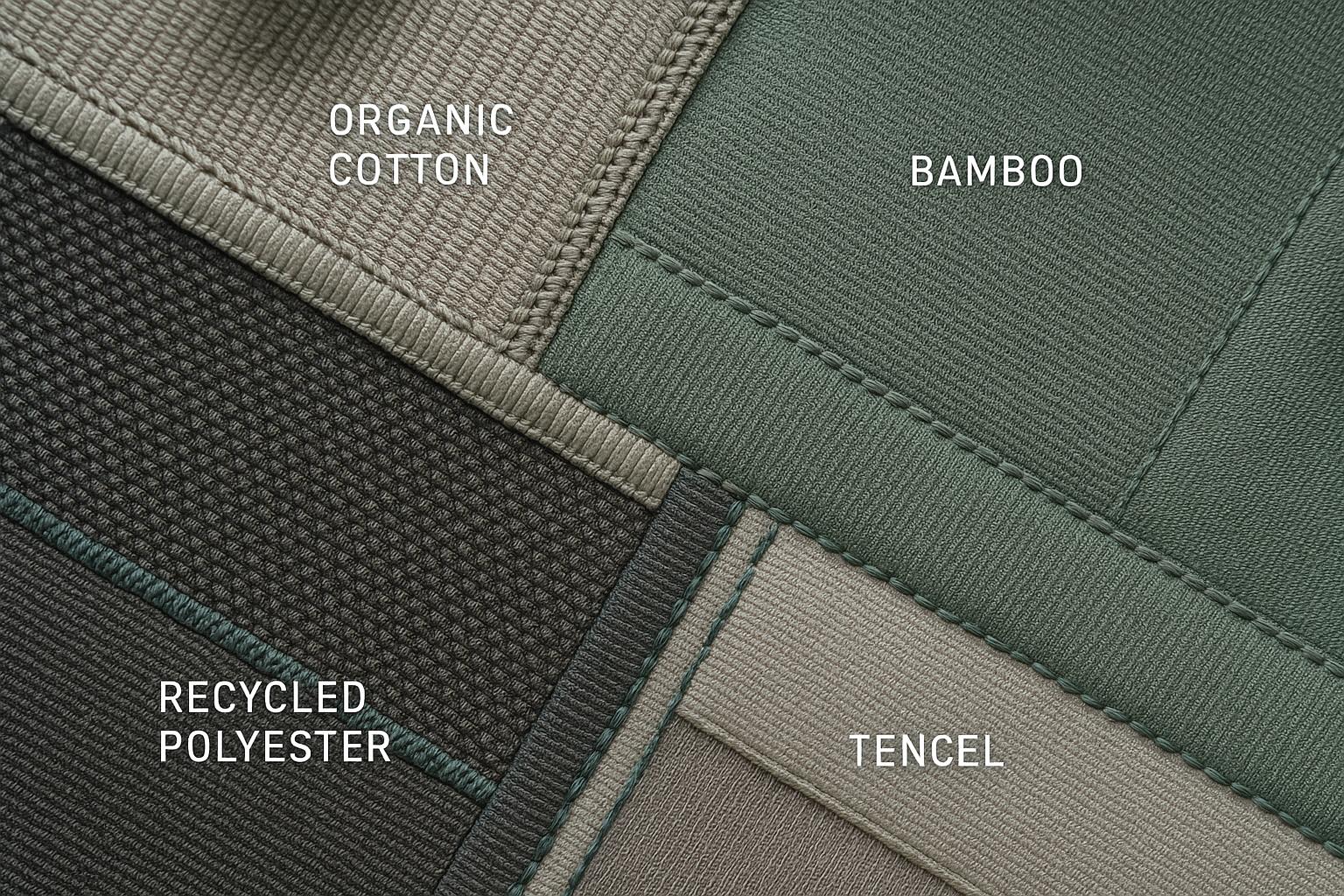
Yoga wear brands are shifting toward eco-conscious materials as consumers demand products that align with their values. With the global yoga apparel market expected to surpass $70 billion by 2028, choosing the right fabrics is crucial for both performance and reducing harm to the planet. Here’s a quick look at four popular fabric options for yoga wear:
- Organic Cotton: Soft, breathable, and hypoallergenic, perfect for gentle yoga styles. Needs spandex for stretch. Certified by GOTS and OEKO-TEX.
- Bamboo: Naturally antibacterial, odor-resistant, and moisture-wicking. Ideal for hot yoga and outdoor sessions. Look for closed-loop processing and FSC certification.
- Recycled Polyester: Made from plastic waste like water bottles, it offers durability, quick-drying, and stretch for intense practices. Certified by GRS and Bluesign.
- Tencel/Modal: Derived from wood pulp, these fabrics are soft, moisture-absorbing, and biodegradable. Great for hot yoga and flowy designs.
Each material balances performance with eco-conscious production, offering brands the opportunity to meet customer demands while reducing their impact. Certifications like GOTS, GRS, and OEKO-TEX ensure quality and safety. Whether your focus is on comfort, durability, or reducing waste, these fabrics provide options to suit a variety of needs.
Organic Cotton: A Natural Fabric Option
Performance Characteristics of Organic Cotton
Organic cotton is known for its soft, gentle texture, making it a comfortable choice for yoga practice and everyday wear. Its natural breathability helps keep you comfortable during movement, and since it’s hypoallergenic and free from harsh chemicals like PFAS, it’s a great option for those with sensitive skin.
However, organic cotton absorbs moisture rather than wicking it away, which means it’s better suited for low-sweat activities, gentle stretches, or cooler settings rather than intense workouts. To add the stretch and flexibility needed for active yoga wear, manufacturers often blend organic cotton with spandex. This combination prevents the fabric from sagging or feeling stiff while maintaining its natural comfort. Reviews of these blends frequently highlight their ability to contour to the body and provide reliable support during practice. Beyond its functional qualities, organic cotton also stands out for its environmental contributions.
Environmental Benefits
Organic cotton has a smaller environmental footprint compared to conventional cotton. It’s grown without synthetic pesticides or fertilizers, reducing chemical runoff and promoting healthier, biodiverse soil. Plus, it requires significantly less water during production. When its lifecycle ends, organic cotton naturally decomposes, avoiding the waste buildup associated with synthetic fabrics.
Certifications for Organic Cotton
When sourcing organic cotton, look for certifications that ensure sustainability and quality. The Global Organic Textile Standard (GOTS) is a leading certification, addressing both ecological and social criteria across the supply chain. Similarly, OEKO-TEX STANDARD 100 ensures textiles are free from harmful chemicals, making them safe for both consumers and the planet. For brands focused on ethical production, Fair Trade Certified guarantees fair wages and safe working conditions for workers. Many reputable lifestyle brands rely on these certifications to maintain high standards in their sustainable yoga apparel.
Bamboo Fabric: Soft, Antibacterial, and Eco-Friendly
Key Properties of Bamboo Fabric
Bamboo fabric is known for its incredibly soft, silky texture, which feels gentle against the skin. Its natural antibacterial and antimicrobial traits help combat odors and limit bacterial growth, keeping your clothes fresh even after light to moderate activity.
What makes bamboo fabric stand out is its thermoregulating ability – it keeps you cool during intense yoga sessions and warm during slower practices like Yin yoga. With excellent breathability and moisture-wicking properties, it efficiently pulls sweat away from your skin, allowing it to stay dry. When blended with other materials, bamboo gains added stretch, making it perfect for dynamic movements. It’s also durable and resists pilling, maintaining its softness and shape through multiple washes. Plus, it offers natural UV protection, making it great for outdoor yoga.
Environmental Factors and Processing Concerns
Bamboo is a fast-growing plant that requires minimal water and no pesticides, making it an eco-friendly crop. It also absorbs more carbon dioxide than hardwood trees and regenerates naturally after harvesting.
However, the way bamboo is processed into fabric matters significantly. Most bamboo fabric is made through the viscose (or rayon) process, which uses harsh chemicals that can harm workers and the environment if not managed responsibly. To ensure ethical and eco-conscious production, look for fabrics made with closed-loop processing systems and certifications like FSC (Forest Stewardship Council) and OEKO-TEX STANDARD 100. These certifications indicate safer practices and reduced environmental impact. Recent recalls have underscored the importance of these measures.
Best Uses for Bamboo in Yoga Wear
Thanks to its practical benefits, bamboo fabric is an excellent choice for yoga wear. It’s especially effective in leggings, sports bras, and lightweight tops, where its moisture-wicking and odor-resistant features shine. Bamboo can absorb up to 60% more moisture than cotton, making it ideal for moderate-intensity yoga sessions. Its natural drape offers a flattering fit, while its hypoallergenic nature ensures it’s gentle on sensitive skin. These qualities make bamboo fabric a versatile option for a variety of yoga apparel.
Recycled Polyester: Reducing Waste in Performance Wear
Environmental Impact of Recycled Polyester
Recycled polyester, or rPET, is derived from PET (polyethylene terephthalate) – the same material used in clear plastic water bottles. These bottles are transformed into durable polyester fibers, which are then used to create items like yoga wear. For instance, a single pair of recycled polyester yoga leggings can repurpose around 12 plastic bottles, giving these discarded materials a new purpose instead of letting them contribute to environmental pollution.
The production of recycled polyester requires less energy and water compared to virgin polyester. It also reduces the need for petroleum extraction, which helps lower carbon emissions and decreases reliance on fossil fuels. This process not only supports environmental conservation but also enhances the performance qualities of activewear fabrics. Many well-known brands have adopted this approach, offering garments made from repurposed PET as high-performance activewear options.
However, it’s important to acknowledge certain drawbacks. Recycled polyester is non-biodegradable and can release microfibers during washing, which may harm aquatic ecosystems. To mitigate this, using specialized laundry bags designed to capture microfibers can be a practical solution.
Performance Benefits for Active Yoga Wear
Beyond its eco-friendly appeal, recycled polyester also delivers excellent performance features. Known for its durability and resilience, the fabric retains its shape, color, and softness even after years of use. It’s more robust than many natural fabrics, making it a reliable choice for high-intensity yoga sessions that involve constant stretching and movement. Additionally, recycled polyester is highly effective at moisture-wicking and quick-drying, ensuring you stay cool and comfortable during intense practices.
Advanced versions, such as REPREVE® Recycled Polyester, take performance to the next level with sweat-wicking and adaptive cooling properties. When combined with materials like Spandex, Lycra, or Elastane, recycled polyester offers remarkable four-way stretch and a snug, compressed fit that moves seamlessly with your body. It resists pilling and maintains its shape, even under frequent use.
Certifications and Sourcing Considerations
For those looking to make environmentally conscious choices, it’s wise to opt for recycled polyester certified by the Global Recycled Standard (GRS) and Bluesign. GRS certification ensures that the recycled materials meet strict environmental and social standards throughout the production process. Meanwhile, Bluesign certification takes it a step further by verifying that the entire manufacturing process minimizes harmful substances and reduces environmental strain. These certifications help ensure that your activewear is both sustainable and responsibly produced.
Tencel (Lyocell) and Modal: Soft and Eco-Friendly Alternatives

Fabric Properties and Benefits
Tencel (Lyocell) and Modal are semi-synthetic fabrics crafted from wood pulp, known for their soft, smooth texture – perfect for yoga wear. These fabrics excel at pulling moisture away from the body, keeping you cool and dry even during intense sessions. Their natural breathability and ability to regulate temperature make them especially handy for hot yoga.
Modal is particularly admired for its elegant drape and high water absorbency, making it an excellent choice for flowy yoga tops and lounge wear. Another plus? Both fabrics are biodegradable, meaning they naturally break down at the end of their life, unlike synthetic materials. Their moisture-wicking abilities and breathability also align with more sustainable production practices.
Closed-Loop Production Process
The production of Tencel focuses on sustainability, using a closed-loop system that recovers and reuses solvents, reducing environmental impact. One leading activewear brand highlights that Tencel sportswear, sourced from sustainably managed forests, offers benefits like being "naturally antibacterial, breathable, cooling, gentle to the skin, and biodegradable".
Modal production follows a similar eco-conscious approach. A lifestyle brand using Lenzing Modal notes that 95% of production materials are recovered and reused. The fabric is derived from beech tree limbs, ensuring that the trees themselves remain intact. This closed-loop system incorporates water-saving technologies and energy-efficient practices, significantly lowering the environmental footprint. These thoughtful production methods align beautifully with the fabrics’ performance features, making them an ideal choice for sustainable yoga wear.
Applications in Yoga Apparel
Thanks to their eco-friendly qualities and efficient production, Tencel and Modal are versatile options for yoga apparel. These fabrics shine in drapey yoga tops, loose-fitting pants, and lounge wear, where their soft texture and fluid movement are most appreciated. Their moisture-wicking properties make them practical for hot yoga and high-energy flows. When combined with spandex or elastane, they create form-fitting leggings and sports bras that offer both stretch and breathability. Tencel’s natural antibacterial properties help garments stay fresh during longer wear, while Modal’s incredible softness appeals to those seeking maximum comfort for restorative yoga or meditation.
sbb-itb-8dbc09a
Eco-Friendly Fabric Guide: How to Choose Sustainable Fabric for Sewing Clothes (with Cris Wood Sews)
Comparing Eco-Friendly Fabrics for Yoga Wear
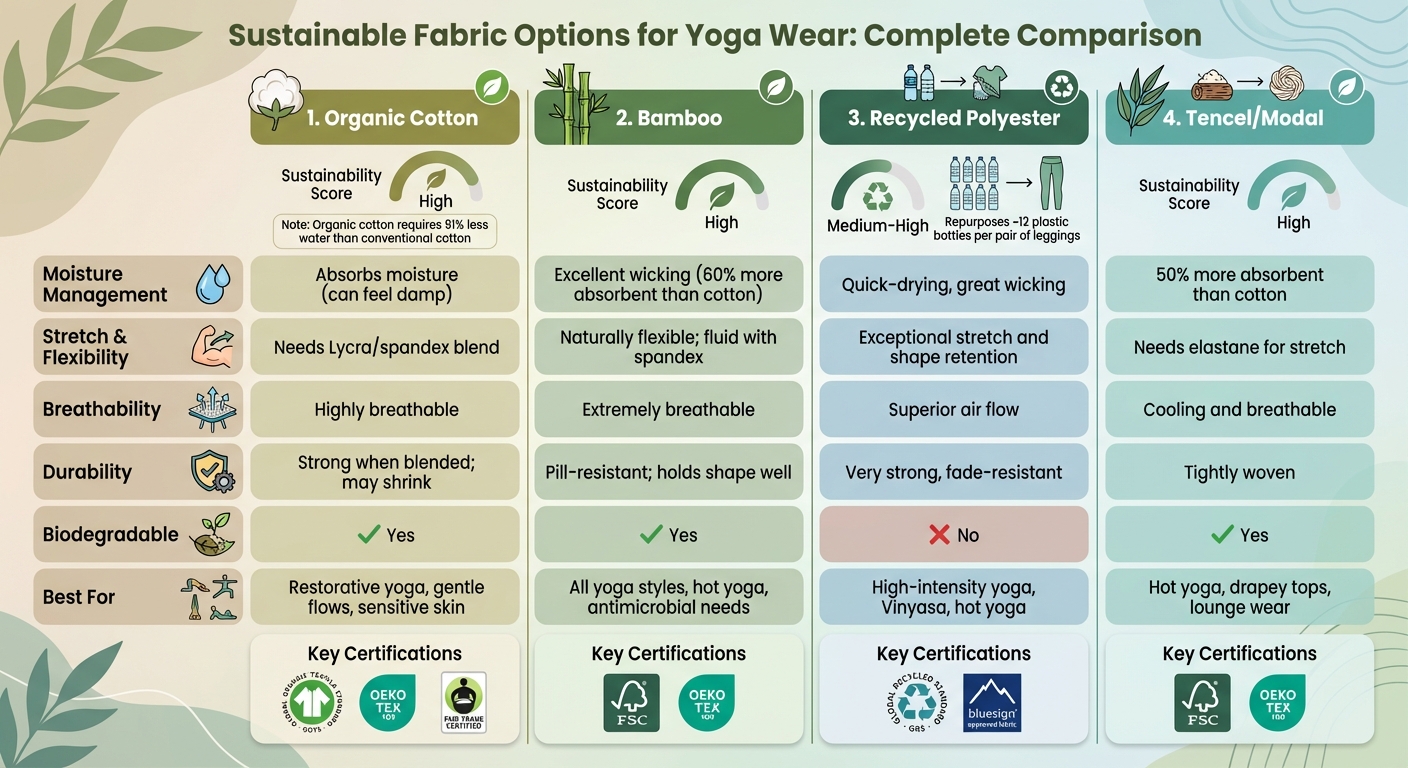
Sustainable Yoga Fabric Comparison: Performance and Environmental Benefits
Fabric Comparison Table
Here’s a breakdown of how popular sustainable fabrics perform across key factors:
| Fabric | Moisture Management | Stretch & Flexibility | Breathability | Durability | Biodegradable | Best For |
|---|---|---|---|---|---|---|
| Organic Cotton | Absorbs moisture (can feel damp) | Needs Lycra/spandex blend | Highly breathable | Strong when blended; may shrink | Yes | Restorative yoga, gentle flows, sensitive skin |
| Bamboo | Excellent wicking | Naturally flexible; fluid with spandex | Extremely breathable | Pill-resistant; holds shape well | Yes | All yoga styles, hot yoga, antimicrobial needs |
| Recycled Polyester | Quick-drying, great wicking | Exceptional stretch and shape retention | Superior air flow | Very strong, fade-resistant | No | High-intensity yoga, Vinyasa, hot yoga |
| Tencel/Modal | 50% more absorbent than cotton | Needs elastane for stretch | Cooling and breathable | Tightly woven | Yes | Hot yoga, drapey tops, lounge wear |
Choosing the Right Fabric for Your Brand
While the table gives a quick overview, your choice of fabric should align with your brand’s goals and the needs of your customers.
If your audience gravitates toward high-intensity yoga styles like Vinyasa or power yoga, recycled polyester is a standout. It dries quickly, stretches effortlessly, and allows superior airflow – perfect for sweaty, demanding sessions. However, keep in mind that it’s not biodegradable.
Bamboo strikes a great balance for brands catering to a variety of yoga practices. Its soft, luxurious feel appeals to comfort seekers, while its durability ensures long-lasting wear without fading or pilling. This makes it a versatile option for both gentle and intense yoga styles.
If your focus is on natural materials and sustainability, organic cotton and Tencel/Modal are fantastic choices. Organic cotton is hypoallergenic, making it a safe bet for sensitive skin. However, it does need to be blended with spandex for adequate stretch. On the other hand, Tencel/Modal absorbs 50% more moisture than regular cotton, making it a strong contender for hot yoga, where staying cool and dry is crucial.
Don’t overlook costs and environmental impact. Raw material production and dyeing processes account for over 90% of an apparel item’s environmental footprint. Your fabric choice will significantly influence both your sustainability efforts and manufacturing costs. Blending natural fibers with recycled synthetics – like combining organic cotton with spandex or bamboo with elastane – can provide an effective mix of performance, eco-friendliness, and affordability. This approach lets you create yoga wear that’s not only functional but also aligns with your brand’s commitment to sustainability.
Manufacturing and Sourcing Eco-Friendly Yoga Wear
Sourcing Eco-Friendly Fabrics in China
China is a global leader in manufacturing, offering both large-scale production capabilities and competitive pricing for eco-friendly yoga wear. When selecting sustainable materials, focus on suppliers offering fabrics like RPET, organic cotton, recycled nylon, bamboo, Tencel, Modal, and hemp.
Certifications are a must when verifying the sustainability of materials. Look for suppliers with recognized certifications such as GRS (for recycled materials), OEKO-TEX Standard 100 (for chemical safety), GOTS (for organic content), and Bluesign (for resource-efficient production). Always request documentation, including certification papers, technical data sheets, and test reports, to ensure compliance.
Many prominent brands set a high standard by requiring their factories to meet OEKO-TEX standards, conducting regular site audits, and ensuring full traceability of material sources and factory locations. This level of transparency should be your benchmark when assessing potential suppliers.
It’s also important to evaluate processing techniques. Choose suppliers that use environmentally conscious methods like closed-loop processing, enzyme-based finishing, or waterless dyeing. Be cautious with bamboo and viscose if their production involves harmful chemicals. Additionally, inquire about the material’s origin, fair labor practices, and whether the fibers are grown locally to reduce emissions from transportation. Adhering to these strict criteria helps establish partnerships with manufacturers that align with your sustainability goals.
New Dong Huang Garment Co., Ltd.’s Capabilities
New Dong Huang Garment Co., Ltd. has over 27 years of experience in activewear production, specializing in yoga wear, running apparel, and outdoor performance clothing. The company holds key certifications, including BSCI, Sedex, and GRS, and has passed audits from major brands like Nike and New Balance.
Equipped with advanced machinery such as bonding and laser cutting tools, NDH ensures precision in producing high-performance yoga wear. Their expertise extends to developing eco-friendly fabrics with features like quick-dry, anti-odor, and anti-UV properties, making them a strong partner for brands aiming to meet environmental targets. Additionally, NDH boasts a 99% on-time delivery rate, backed by stringent quality control measures.
The company offers custom design services that cover everything from trend research and tech pack development to pattern creation and fabric selection. These end-to-end solutions are particularly valuable for brands launching sustainable yoga wear. Chinese factories, including NDH, typically deliver bulk orders within 15–30 days and samples in as little as 5–7 days. Minimum order quantities can be as low as 200 pieces per style, providing flexibility for smaller brands.
Balancing Cost, Lead Time, and Environmental Goals
Choosing the right fabric is a critical decision that impacts both your sustainability goals and overall costs. Strategic planning can help you strike a balance between performance, eco-friendliness, and affordability.
Blending natural fibers with recycled synthetics is one practical approach. For instance, combining organic cotton with spandex or bamboo with elastane can result in materials that are both sustainable and functional, without significantly increasing costs.
When evaluating suppliers, prioritize those who offer full transparency. This includes access to supplier lists, material data, and evidence of compliance. Strong communication and strict quality controls are also essential to reduce risks and maintain high production standards.
Finally, consider the entire lifecycle of your products. Assess whether fabrics are biodegradable, compostable, or recyclable, and confirm they break down safely without releasing harmful microplastics. This long-term perspective helps you create a genuinely sustainable brand, going beyond surface-level claims to deliver meaningful environmental benefits.
Conclusion
Key Takeaways
Sustainable fabrics not only minimize environmental impact but also deliver impressive performance. For instance, organic cotton requires 91% less water compared to conventional cotton and is grown without harmful pesticides. Recycled polyester gives new life to plastic waste, while materials like bamboo and Tencel naturally resist bacteria and manage moisture effectively. Each option brings unique benefits – from the breathability of organic cotton to the toughness of recycled synthetics.
The demand for eco-conscious products is undeniable. Globally, 55% of yoga practitioners prioritize eco-friendly materials, and 73% of Gen Z consumers actively seek out sustainable brands. This creates a significant opportunity for companies investing in sustainable practices to tap into a growing market.
Beyond their environmental perks, sustainable fabrics also excel in comfort and longevity. Natural fibers are hypoallergenic and free from toxic chemicals, helping to prevent skin irritation during workouts. Additionally, high-quality sustainable garments are built to last, offering better long-term value despite their potentially higher initial cost.
When sourcing materials, transparency and certifications should be top priorities. Look for recognized certifications like GRS, GOTS, OEKO-TEX, and Bluesign to validate sustainability claims. Always request comprehensive documentation, including certification papers and technical data sheets, and thoroughly assess suppliers based on their production methods and ethical labor standards.
With these insights in mind, here are practical steps to help you incorporate sustainability into your manufacturing process.
Next Steps for Eco-Friendly Manufacturing
To translate these sustainability principles into action, New Dong Huang Garment Co., Ltd. provides a complete solution for producing eco-friendly yoga wear. With over 27 years of experience in activewear manufacturing, the company holds certifications such as BSCI, Sedex, and GRS, and has passed audits for major global brands like Nike and New Balance. Their advanced machinery and custom design services – spanning trend research to fabric selection – ensure seamless support for creating sustainable collections.
Offering a 99% on-time delivery rate, bulk production turnaround in just 15–30 days, and minimum orders starting at 200 pieces, New Dong Huang Garment Co., Ltd. combines flexibility with reliability. Whether you’re launching your first eco-friendly yoga line or scaling up an existing sustainable collection, partnering with a manufacturer that understands both performance needs and environmental standards is a smart move for success.
FAQs
What certifications should I consider when selecting sustainable fabrics for yoga wear?
When picking fabrics for yoga wear that align with eco-friendly and ethical values, certifications play a crucial role. They ensure the materials meet high standards for sustainability, ethics, and quality. Here are some key certifications to consider:
- GOTS (Global Organic Textile Standard): Guarantees the use of organic fibers and environmentally responsible production methods.
- OEKO-TEX® STANDARD 100: Confirms that fabrics are tested and free from harmful chemicals.
- GRS (Global Recycled Standard): Verifies the inclusion of recycled materials and sustainable production practices.
- Fair Trade: Promotes ethical labor conditions and fair wages for workers.
- RWS (Responsible Wool Standard): Ensures animal welfare and sustainable sourcing of wool.
By choosing fabrics with these certifications, you can feel confident that your yoga wear supports both environmental care and ethical practices, without compromising on comfort or durability.
What are the environmental benefits of using recycled polyester for yoga wear?
Recycled polyester stands out as a more eco-conscious alternative to traditional polyester. By transforming existing plastic waste, such as discarded water bottles, into new fibers, it cuts down on the reliance on virgin petroleum-based materials. This process not only uses less energy but also reduces greenhouse gas emissions during manufacturing.
On top of that, recycled polyester helps address the growing problem of plastic waste. Instead of heading for landfills or polluting oceans, plastic gets a second life. Its strength and functionality make it a great choice for yoga wear, all while promoting environmentally friendly practices.
What are the advantages of using bamboo fabric for yoga wear?
Bamboo fabric stands out as an excellent choice for yoga wear due to its natural softness, breathability, and moisture-wicking abilities. These qualities help keep you feeling dry and comfortable, even during intense workouts. Plus, its hypoallergenic and antimicrobial properties make it ideal for those with sensitive skin. And let’s not forget its natural odor resistance, which helps you stay fresh no matter how challenging your session gets.
Beyond its performance perks, bamboo fabric is also a more sustainable option. Bamboo grows rapidly and requires neither pesticides nor excessive water, making it a thoughtful pick for those who care about minimizing their environmental impact.