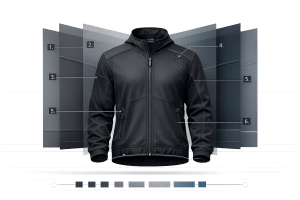

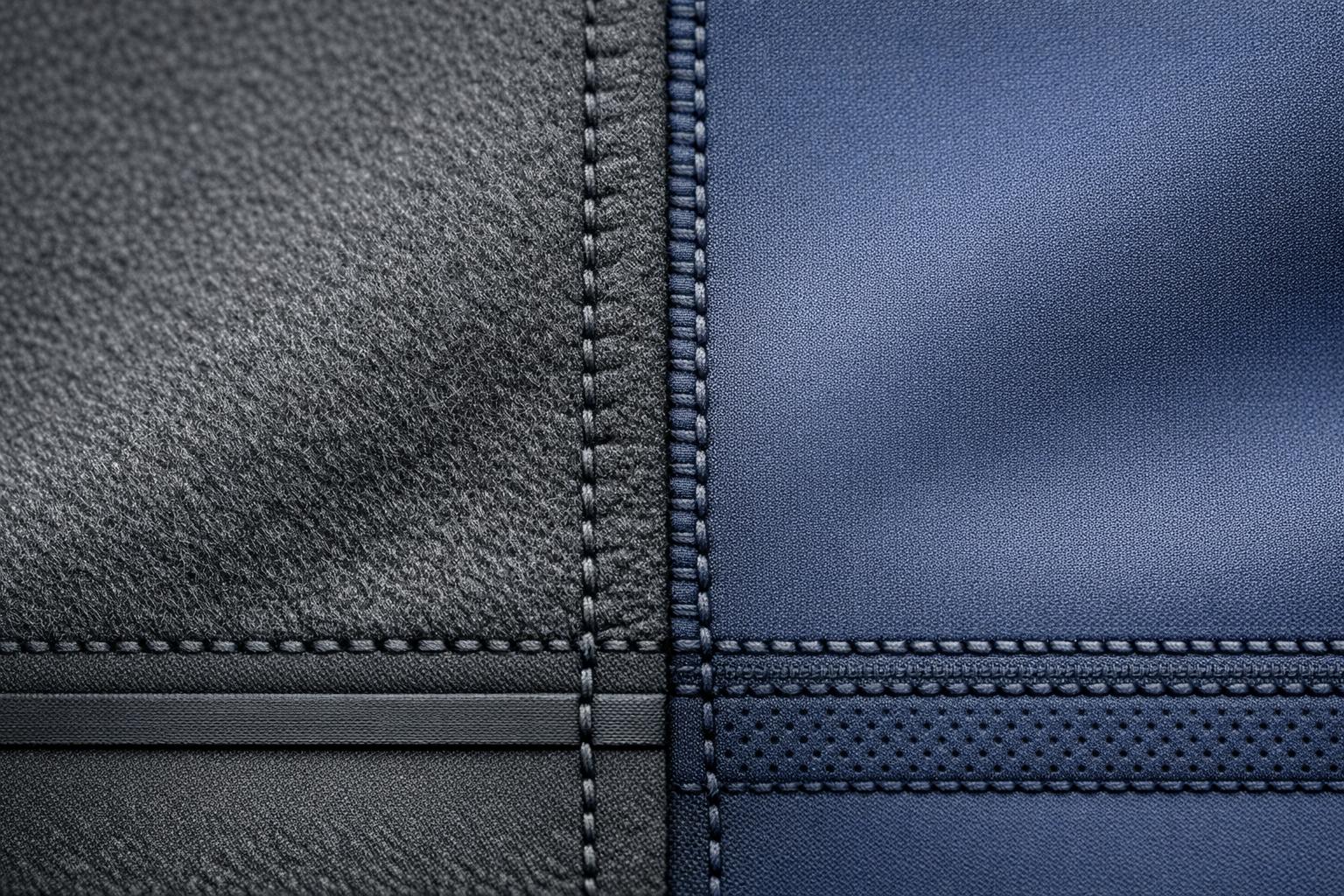
When choosing activewear, the fabric’s texture and performance matter. Two popular options are brushed and peached fabrics, each offering distinct advantages. Brushed fabric has a soft, fuzzy surface created by lifting fibers, making it warm and cozy – ideal for cold-weather gear like fleece hoodies and thermal leggings. Peached fabric, on the other hand, has a smooth, velvety finish achieved by gently abrading the surface, making it sleek, durable, and perfect for high-performance activewear like yoga leggings and sports bras.
Here’s a quick breakdown:
- Brushed Fabric: Warm, plush texture; traps heat; prone to pilling; best for winter wear.
- Peached Fabric: Smooth, suede-like feel; resists wrinkles and pilling; great for breathability and multi-use.
Quick Comparison
| Feature | Brushed Fabric | Peached Fabric |
|---|---|---|
| Texture | Soft, fuzzy | Smooth, velvety |
| Warmth | High (traps heat) | Moderate |
| Durability | Prone to pilling | Resists pilling |
| Best For | Cold-weather gear, loungewear | Performance wear, yoga apparel |
| Moisture Management | Good | Excellent |
Whether you need warmth for winter or sleek comfort for workouts, understanding these fabrics helps you pick the right gear.
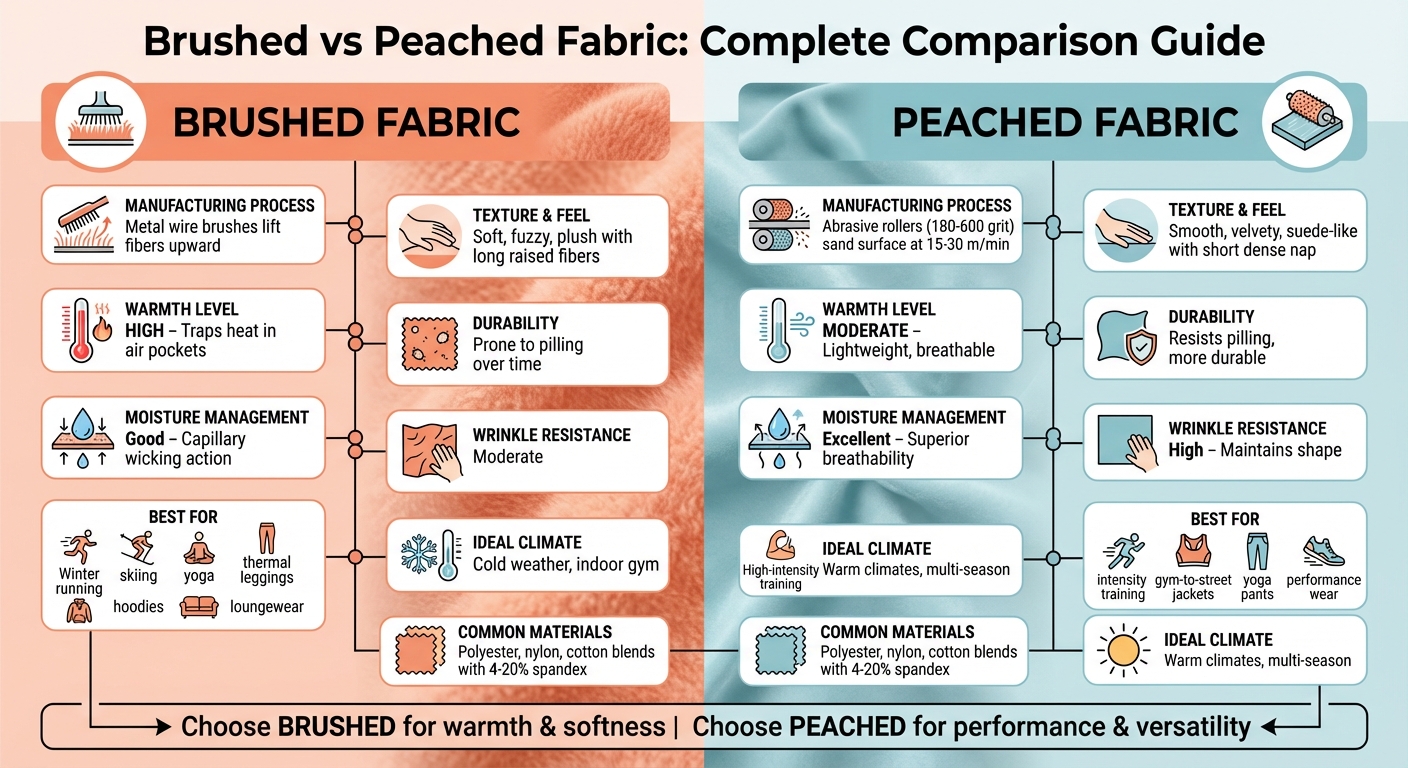
Brushed vs Peached Fabric Comparison Chart for Activewear
Brushed Poly Explained
What is Brushed Fabric?
Brushed fabric undergoes a special process that gives it a soft, fuzzy surface, often referred to as a "nap." This effect is achieved by running the fabric through machines equipped with wire brushes or metal teeth that gently lift the fibers. In some cases, abrasive rollers are used to create a shorter, denser texture.
The raised fibers serve a dual purpose. They create tiny air pockets that trap body heat, providing warmth without adding bulk, and they also help wick moisture away from the skin during physical activity. This process not only enhances the fabric’s texture but also improves its functionality in several ways.
"Brushing gently lifts fibers to create a warm, fuzzy feel that’s perfect for cooler-weather activewear and loungewear. It adds warmth without weight, keeping you toasty." – Pine Crest Fabrics
Main Characteristics of Brushed Fabric
The standout feature of brushed fabric is its softness, which gives it a plush, velvety feel. This texture reduces friction and minimizes chafing, making it ideal for prolonged wear. The raised fibers also excel at trapping heat, providing excellent thermal insulation without making the garment feel heavy or bulky.
However, there are a few drawbacks. The brushing process can weaken the fibers slightly, making the fabric more prone to pilling, where small fiber balls form on the surface after repeated use or washing. Additionally, the raised texture can trap dirt and stains more easily than smoother fabrics.
Materials Used in Brushed Fabric
Brushed fabric can be made from a variety of materials, each offering unique benefits. Synthetic fibers like polyester and nylon are commonly used due to their durability and lightweight properties. Cotton, on the other hand, provides a naturally soft texture that works exceptionally well with the brushing process, resulting in a cozy, flannel-like feel.
Blended fabrics are also popular, combining the best features of different materials. For instance, blends of polyester, cotton, nylon, and sometimes spandex offer the durability of synthetics with the softness and breathability of natural fibers. Recycled polyester, often sourced from items like plastic bottles or discarded fishing nets, is increasingly used by brands that prioritize sustainability.
Brushed Fabric in Activewear Products
Brushed fabric is a go-to choice for activewear, thanks to its warmth, softness, and performance benefits. It’s especially common in cold-weather base layers like thermal leggings and long-sleeve tops, which are designed to retain body heat during activities like skiing, hiking, or winter running. The fuzzy surface creates a comfortable micro-climate next to the skin, while outer layers handle wind resistance.
Yoga leggings often feature brushed finishes described as "buttery soft" or "cloud-like", offering a snug, chafe-free fit that enhances comfort during stretches and transitions. Similarly, athletic hoodies and joggers with brushed interiors deliver a cozy, luxurious feel, making them perfect for both active recovery and everyday wear.
What is Peached Fabric?
Peached fabric stands out for its smooth, luxurious feel, offering a unique combination of performance and style. Its name comes from the soft, velvety texture that mimics the skin of a peach. Unlike brushed fabric, which creates a fuzzy surface, peached fabric delivers a sleek, suede-like finish that feels incredibly smooth against the skin. This finish is achieved by running the fabric through specialized sueding machines equipped with abrasive rollers – usually coated with emery paper ranging from 180 to 600 grit. These rollers spin at speeds of 15 to 30 meters per minute, gently abrading the surface without compromising the fabric’s strength.
The process raises microfibers on the fabric’s surface, creating a fine, dense nap that sets it apart from brushed finishes. To refine the texture further, manufacturers often use cellulase enzymes to remove loose fibers and apply resins to stabilize the material.
"Peached finishes create a sleek, smooth surface by removing loose fibers. The result is a luxurious, elegant feel – like silk for activewear." – Pine Crest Fabrics
This process not only enhances the fabric’s appearance but also improves its drape, durability, and wrinkle resistance. The result is a material that feels light and breathable, wicks away moisture, and offers a "silk-like" sensation without the bulk of traditional brushed fabrics.
Main Characteristics of Peached Fabric
The hallmark of peached fabric is its velvety, suede-like texture, which feels polished and smooth rather than fuzzy. It provides a "second-skin" sensation, making it ideal for extended wear during physical activities. The matte finish adds an elegant touch, making it suitable for both athletic and casual wear.
Peached fabric is also known for its durability. The shorter, denser nap resists pilling – those pesky little fiber balls that can form on brushed fabrics after repeated washing. This resilience makes it a go-to choice for garments that endure frequent use and laundering.
"Its processed structure provides a softness similar to flannel, yet without the pilling flannel is known for." – Next Level Apparel
Another key feature is its wrinkle and crease resistance, ensuring the fabric maintains its shape and smooth appearance even after being packed in a gym bag or suitcase. It offers moderate stretchability, often enhanced during manufacturing, allowing for ease of movement without excessive compression.
Moisture management is another standout quality. Peached fabric is highly breathable and absorbs sweat and oil effectively, keeping you comfortable during workouts. Its structure also supports high-density printing, making it a favorite for branded activewear with vibrant designs.
Types of Peached Finishes
Peached fabric finishes come in two main types: single-sided (back peached) and double-sided.
- Single-sided finishes focus on the interior of the garment, providing a soft feel against the skin while leaving the exterior smooth and sleek. This cost-effective option prioritizes interior comfort.
- Double-sided finishes treat both the interior and exterior, offering consistent luxury throughout the garment. This method, achieved using multi-roller sueding machines with 8 to 12 rollers, is often reserved for premium activewear where a plush feel on both sides is desired.
The choice of abrasive tools also influences the final texture. Emery roller sueders, with 180 to 600 grit paper, are ideal for microfiber polyester and nylon Taslan. Meanwhile, carbon brush sueders, featuring fine carbon wire brushes, work best for lightweight fabrics like nylon, polyester chiffon, and fine tricot. These variations allow manufacturers to tailor the fabric’s texture to specific applications, offering versatility for activewear.
Peached Fabric in Activewear Products
Peached fabric isn’t just about aesthetics – it delivers on performance too, making it a staple in modern activewear. Its smooth, non-chafing surface is perfect for yoga leggings and sports bras, ensuring comfort and flexibility during stretches and transitions.
Athletic jackets and yoga tops benefit from the fabric’s polished, matte finish, which transitions effortlessly from workout sessions to casual outings. Thanks to its wrinkle resistance, these garments maintain their shape and look fresh even after being tossed in a gym bag.
The fabric is commonly made from polyester and nylon microfibers, often blended with cotton or spandex for added stretch and comfort. This combination offers the durability and moisture-wicking properties of synthetics while retaining the softness of natural fibers. Its opaque quality makes it especially popular for leggings and fitted tops where coverage is crucial.
While peached finishes add about $0.25–$0.50 to the cost of a garment, this small increase reflects the premium quality and feel of the fabric. As a result, it’s a sought-after choice for both retail and promotional apparel, with consumers willing to pay a bit more for its luxurious touch.
sbb-itb-8dbc09a
Process and Texture Differences
Brushing vs Peaching: Manufacturing Process
The production methods for brushed and peached fabrics result in entirely different surface finishes. Brushing involves the use of fine metal wire brushes to lift fibers from the fabric’s surface. This creates a fluffy texture by raising the fibers.
Peaching, on the other hand, employs abrasive rollers coated with emery paper (typically 180–600 grit) or carbon brushes to gently sand the fabric surface. This process abrades the fibers into a compact, dense nap. Machines used for peaching typically operate at speeds of 15–30 m/min (around 50–100 ft/min) and are often equipped with 8–12 rollers to ensure consistent results.
"Brushing – the hair is long and the fabric is fluffy; Sanding [Peaching] – short hair feels like suede." – Textile School
A key detail in the manufacturing process is timing. For brushed fabrics, it’s best to complete brushing before dyeing solid colors. Brushing after dyeing can expose the undyed fiber cores, creating an unintended "frosted" effect. Similarly, for printed designs, brushing should occur before printing to prevent colored fibers from overlapping unprinted areas.
| Feature | Brushing | Peaching |
|---|---|---|
| Equipment | Metal wire brushes | Abrasive rollers with emery paper or carbon brushes |
| Mechanical Action | Lifts fibers upward to create height | Abrades surface to break down fibers |
| Fiber Length | Long, raised "hair" | Short, fine microfibers |
| Visual Result | Fuzzy, textured, can appear frosted | Smooth, matte, velvety |
| Processing Speed | Varies by equipment | 15–30 m/min (approximately 50–100 ft/min) |
These contrasting techniques not only create unique visual effects but also influence the fabric’s overall performance.
Texture and Performance Comparison
The differences in production methods lead to distinct textures and performance characteristics. Brushed fabrics have a cozy, thick feel with a fuzzy surface that traps air in the pockets formed by the raised fibers. This structure provides warmth by enhancing insulation.
In contrast, peached fabrics feel smooth and supple, offering a suede-like texture that glides against the skin. The short, dense pile creates a lightweight "second-skin" effect, making the fabric drape beautifully while resisting wrinkles. This makes it ideal for maintaining a polished look, even after being packed in a gym bag.
Durability is another area where the two finishes differ. Brushed fabrics, while able to handle frequent washing, are more prone to pilling over time as the raised fibers form small balls on the surface. Peached fabrics, with their compact and fortified structure, resist pilling more effectively. The abrasion process during peaching strengthens the fabric, making it particularly suitable for activewear that needs to endure repeated use and washing.
When it comes to moisture management, brushed fabrics rely on their raised fibers to create a capillary action that wicks sweat away. Peached fabrics, however, depend more on the inherent moisture-wicking properties of synthetic blends like polyester and nylon. Additionally, the smooth surface of peached fabrics releases dirt more easily during washing, whereas the fuzzy texture of brushed fabrics can trap debris. These differences are crucial for selecting the right fabric finish for specific activewear needs.
Activewear Applications: Brushed vs Peached Fabric
Brushed Fabric for Cold-Weather and Casual Wear
Brushed fabric shines when it comes to cold-weather activewear, where keeping warm and comfortable is the top priority. The brushing process lifts the fibers, creating tiny air pockets that trap heat close to your body. This makes it a fantastic choice for winter leggings, base layers, and athletic hoodies. Whether you’re heading out for a brisk run or hitting the slopes, this insulating layer helps regulate your body temperature.
Its soft, plush texture also makes brushed fabric a go-to for activities like yoga. The smooth surface minimizes friction, reducing the chance of chafing during repetitive movements or floor exercises.
"Brushed fabrics are also a great choice for making activewear. These fabrics are soft, warm and breathable, helping to regulate body temperature and keep athletes performing at their best even in harsh conditions." – Admin, BrushedFabric.com
Brushed activewear is often made with polyester or nylon blends, usually paired with about 4% spandex to provide excellent stretch and recovery. However, double-brushed polyester can feel too warm for summer workouts, making it better suited for cooler climates or indoor gym sessions.
Peached Fabric for Performance and Multi-Use Garments
Peached fabric, on the other hand, is designed for high-performance and versatile wear. Its durability, moisture-wicking properties, and wrinkle resistance make it ideal for intense activities and garments that need to transition between uses. The smooth, suede-like finish resists pilling and enhances breathability, keeping you cool and comfortable during high-energy workouts.
This fabric’s refined, wrinkle-resistant look makes it perfect for athletic jackets and training tops that work just as well in the gym as they do for casual outings. Thanks to its breathability, peached fabric is particularly well-suited for warmer climates, and its durability ensures it holds up beautifully through repeated washes.
Fabric Finish Selection Guide by Activity
Choosing the right fabric finish depends on your activity and climate. Here’s a quick guide to help you decide:
| Activity/Garment Type | Recommended Finish | Key Benefit |
|---|---|---|
| Winter Running/Skiing | Brushed | Thermal insulation and heat retention |
| Yoga & Pilates | Brushed | Soft texture and reduced friction |
| High-Intensity Training | Peached | Breathability and resistance to pilling |
| Sports Bras/Compression Tops | Peached | Smooth, sleek feel without added bulk |
| Cold-Weather Hoodies | Brushed | Cozy warmth and moisture management |
| Gym-to-Street Jackets | Peached | Wrinkle resistance and polished appearance |
Ultimately, the choice between brushed and peached fabric comes down to your specific needs – whether you’re prioritizing warmth and comfort for cold-weather workouts or durability and breathability for high-intensity, multi-purpose gear.
Top activewear brands, like New Dong Huang Garment Co., Ltd., utilize these fabric finishes to create apparel that covers a wide range of performance requirements.
Conclusion
Choosing the right fabric finish means understanding the unique qualities and textures of each method. Brushed fabric involves using metal or wire brushes to lift fibers, resulting in a soft, plush texture. On the other hand, peached fabric uses abrasive rollers to create a smooth, velvety surface.
These processes directly impact the fabric’s texture and performance. Brushed fabric develops a thick nap, which provides excellent warmth, making it ideal for cold-weather gear like thermal leggings and hoodies. Meanwhile, peached fabric delivers a sleek, matte finish, offering breathability, wrinkle resistance, and a refined drape – perfect for high-performance activewear.
When deciding between these finishes, consider the garment’s purpose and the climate. If you’re looking for winter base layers or casual loungewear focused on warmth and softness, brushed fabric is the way to go. For performance leggings, yoga pants, or gym-to-street jackets that need to stay cool, resist wrinkles, and maintain a polished look, peached fabric is the better option. Plus, peached finishes tend to resist pilling better over time, keeping garments looking fresh even after repeated washes.
Both finishes work well with polyester, nylon, and cotton blends, often combined with 4% to 20% spandex for added stretch and recovery – key features in activewear. Manufacturers like New Dong Huang Garment Co., Ltd. use both techniques to create versatile activewear that meets the needs of athletes across different climates and activities, ensuring they have the right gear for every workout.
FAQs
What makes peached fabric a great choice for activewear?
Peached fabric stands out for its soft, velvety texture, offering a smooth and gentle feel that’s perfect against the skin. This makes it a go-to choice for activewear that’s designed to keep up with your every move throughout the day.
Beyond its comfort, peached fabric is known for its drape and flexibility, providing a flattering fit that doesn’t compromise on ease of movement. Its distinct surface adds a touch of elegance, giving activewear a polished, premium appearance that works just as well for workouts as it does for casual wear.
How does brushing impact the durability of fabric?
Brushing transforms the texture of fabric by lifting its fibers, creating a soft, velvety surface that feels thicker and cozier. This technique also helps reduce pilling and wrinkles, making it a practical choice for activewear. However, since brushing uses mechanical abrasion, it can slightly weaken the fibers, which may reduce the fabric’s durability over time compared to non-brushed options. Even so, brushed fabrics remain a favorite for their unmatched comfort and functionality, whether for daily wear or athletic use.
What’s the difference in moisture management between brushed and peached fabrics?
Brushed and peached fabrics each bring distinct characteristics to the table, especially when it comes to moisture management. Brushed fabrics are known for their soft, fuzzy surface, which gives them a cozy feel and tends to hold onto moisture slightly more. Peached fabrics, in contrast, feature a smoother, velvety texture that often excels at wicking moisture, though this largely depends on the material’s composition.
When it comes to activewear, the decision between the two often boils down to personal preference and the type of activity. For performance-focused gear, prioritizing high-quality fabrics specifically designed to handle moisture effectively is essential.